Research Resource Identification (RRID) and re3data have mapped their data to advance interoperability, improve metadata quality and completeness across science infrastructure.
What was done? A joint group worked together to determine which RRIDs are associated with which re3data records. We examined repository names, URLs and additional identifiers such as FAIRsharing, and we identified over 540 entries present in both registries. The corresponding identifiers of the other registry have now been added to both systems. In the process, both teams found duplicated records, repositories that are long gone and inaccurate metadata. We made much needed updates and both repositories are much better for it. Up-to-date repository information is crucial and contributes to high standards in data management, follows the FAIR principles and promotes a culture of open science.
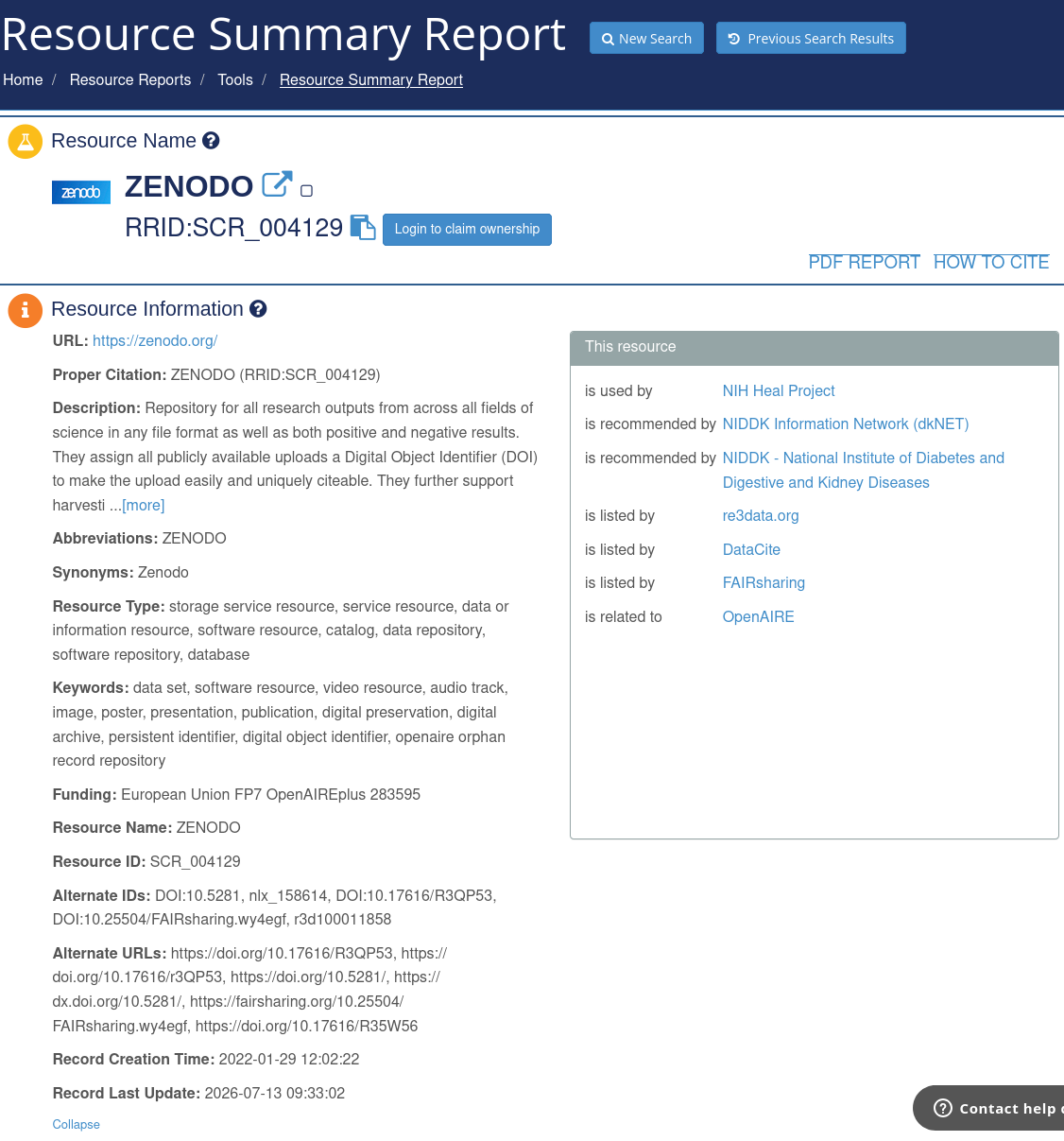
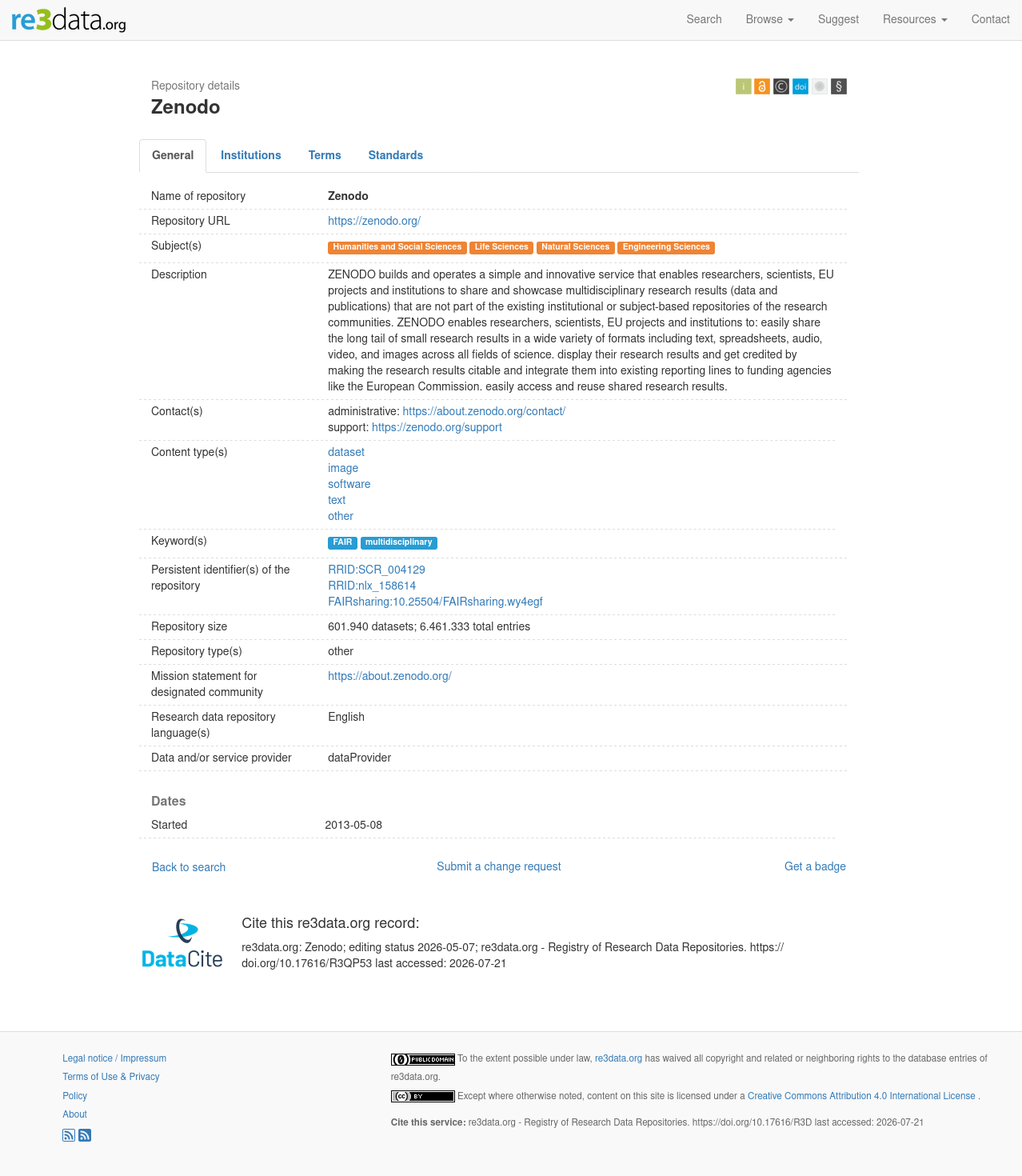
What does it look like? Both systems RRID and re3data have both identifiers and links to the corresponding record in the other repository (see below). This disambiguates the number of data repositories that are available currently for use, filling in both systems with more accurate metadata.
RRIDs Resource summary report displays if the resource is listed by re3data and other registries in the resource infobox. The re3data identifier and DOI of the re3data record are listed under „Alternate IDs“ and the record DOI is linked under „Alternate URLs“ in the resource information. The re3data metadata schema includes the property "repositoryIdentifier". It is defined as an identifier that refers to the research data repository or a record describing the research data repository. In the record it is displayed as "Persistent identifier(s) of the repository" and presents the name of the registry in combination with the corresponding record ID. When registering a repository with re3data, the editorial team will check whether the repository is already registered in other registries such as SciCrunch, FAIRsharing, OpenDoar and ROAR. When a record pointing to the same resource is identified, the ID is added to the re3data record.
Why do we need two systems to track this one thing?
Scope of RRIDs The RRID initiative was started by a group of 25 journals to improve how resources found in the methods section of manuscripts can be better identified. The initiative has grown to encompassing thousands of journals, but the primary purpose is to identify reagents such as antibodies or plasmids, and resources such as organisms, tissues and cells. RRIDs for statistical tools were initially added to the initiative and both shared facilities and instruments have been gaining ground working with authors to improve citation of these key resources. However, while RRIDs for data repositories have been used in the literature, these were never the focus of the project.
Scope of re3data The Registry of Research Data Repositories is a major directory of research data repositories across all disciplines worldwide. It makes metadata on repositories openly available according to re3data’s Metadata Schema Version 4.0 and thus enables users to make well-informed choices where to store or access data sets. The registry additionally acts as a reference point for repository metadata, providing a comprehensive overview of the landscape. Every repository record provides both information on general properties such as repository name, description and access conditions as well as domain-related information, such as subject, metadata schema and keywords. Its goal is to promote a culture of sharing, increased access and better visibility of research data.
Authors: Anita Bandrowski (SciCrunch), Martijn Roelandse (SciCrunch), Charlotte Neidiger (re3data), Robert Ulrich (re3data)